
Why the Price Gap Closed — and Why It Matters
A few years ago, manual awnings were meaningfully cheaper than motorized. That gap has nearly disappeared. Today, a motorized awning costs only about 10% more than a manual model of the same size and style — often just a few hundred dollars on a typical install. The practical difference in daily use, however, is enormous.
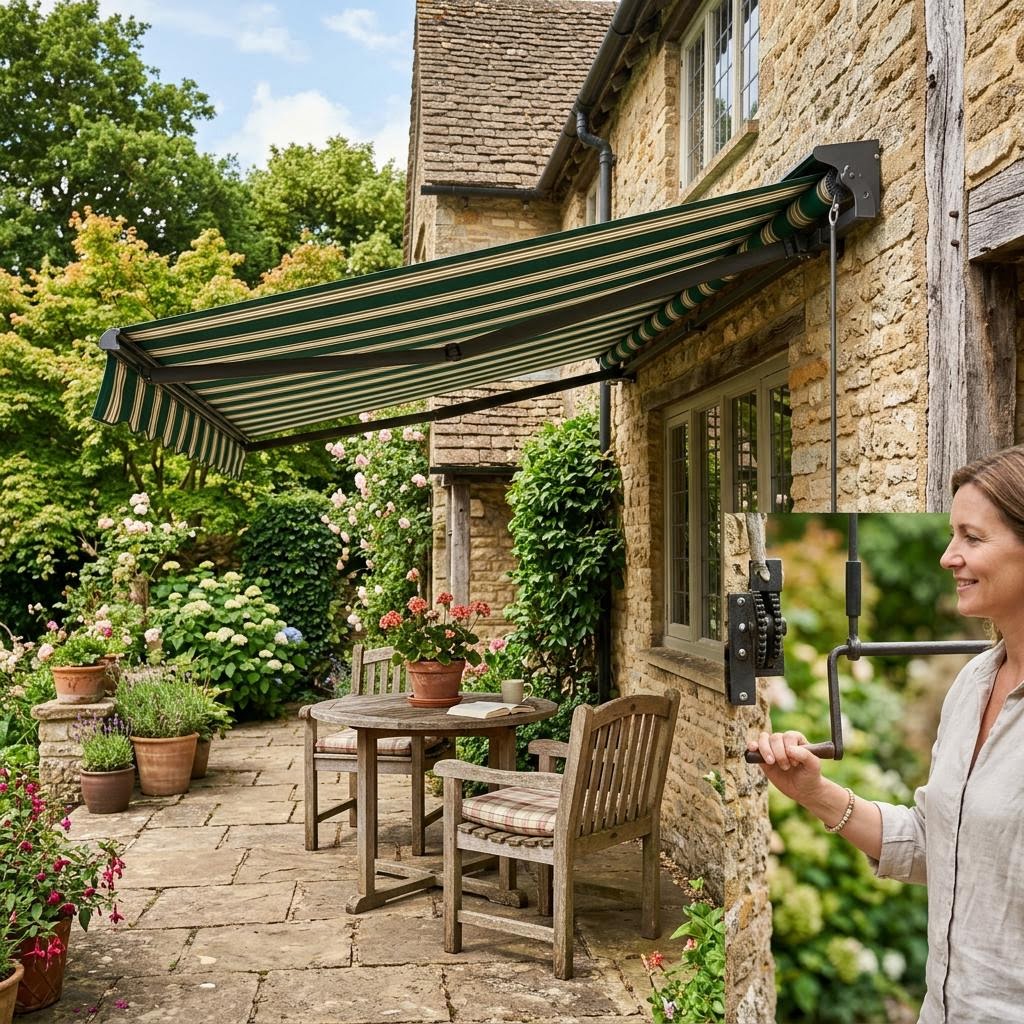
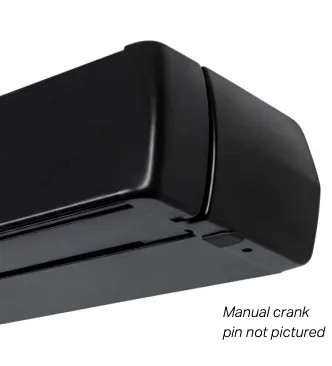
Homeowners who choose manual to save money typically find the savings smaller than expected, while giving up the convenience that drives actual use. An awning that requires physical effort to deploy is an awning that stays retracted. Manual awnings are left closed far more often than motorized equivalents — and an awning that never gets opened delivers zero value.
The Wind Sensor: Not Optional If You Live in the Open
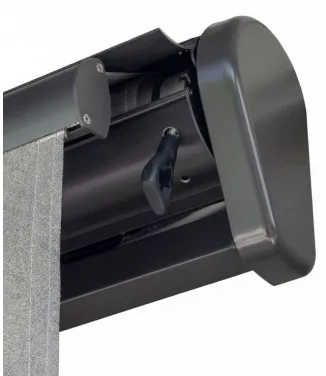
Modern motorized units can be paired with a wind/vibration sensor that automatically retracts the awning when wind exceeds a safe threshold (typically 20–25 mph). Manual awnings have no equivalent protection — if a storm rolls in while you're not home, the awning stays out.
The Verdict: If you live in a coastal area, the Midwest, or a high-elevation region, the wind sensor is not optional. A $250 sensor add-on protects a $4,000+ investment from being ripped off the side of your house.
LED Lighting: Included, Not Extra
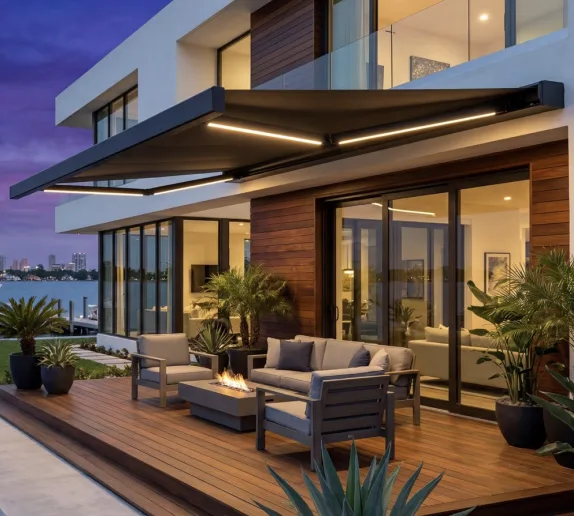
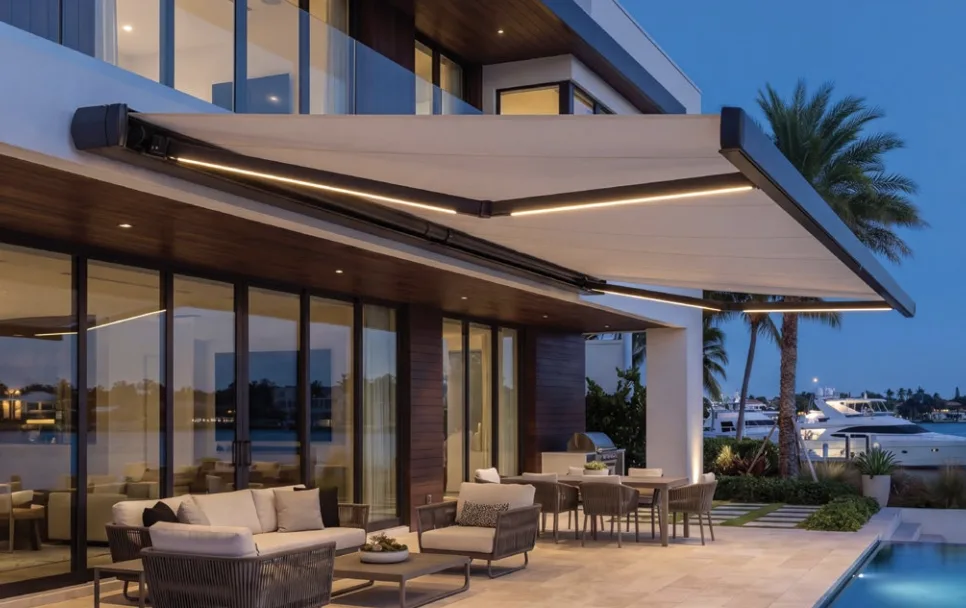
Semi cassette and full cassette motorized awnings include built-in, adjustable LED arm lighting at no additional cost. This extends usable hours into the evening — one of the most-cited reasons homeowners report getting more value from their motorized awning than expected.