HomeFabric Guide

Standard Fabric or
Sunbrella®?

Standard acrylic costs less upfront — but most homeowners regret it by year five. Sunbrella® adds $1,200–$1,500 to a typical 12×10 awning and lasts twice as long.

The Short Version

Standard acrylic works fine indoors or in mild climates — but on a patio awning baking in direct sun, it fades noticeably within 3–5 years. Sunbrella® is solution-dyed (color goes through the fiber, not just on the surface), carries a 5–10 year warranty, and is the industry standard for outdoor performance. The upgrade is $1,200–$1,500 on a 12×10 motorized awning — almost always worth it.

Standard acrylic awning fabric
~15–30 colors

Standard Acrylic

Included

Price Impact

No upcharge

Base price includes standard acrylic

The Good

  • • Lowest upfront cost
  • • Adequate for shaded or mild-climate installations
  • • Basic UV and water resistance
  • • Faster lead time — more colors in stock

The Bad

  • • Surface-dyed — color fades from the outside in
  • • Noticeable fading within 3–5 years in direct sun
  • • Shorter 2–3 year fabric warranty on most brands
  • • Limited pattern selection (15–30 basic colors)
  • • More susceptible to mildew in humid climates
  • • Replacement is more expensive than the upgrade cost

Warranty

2–3 years fabric warranty (varies by brand).

RECOMMENDED — INDUSTRY STANDARD
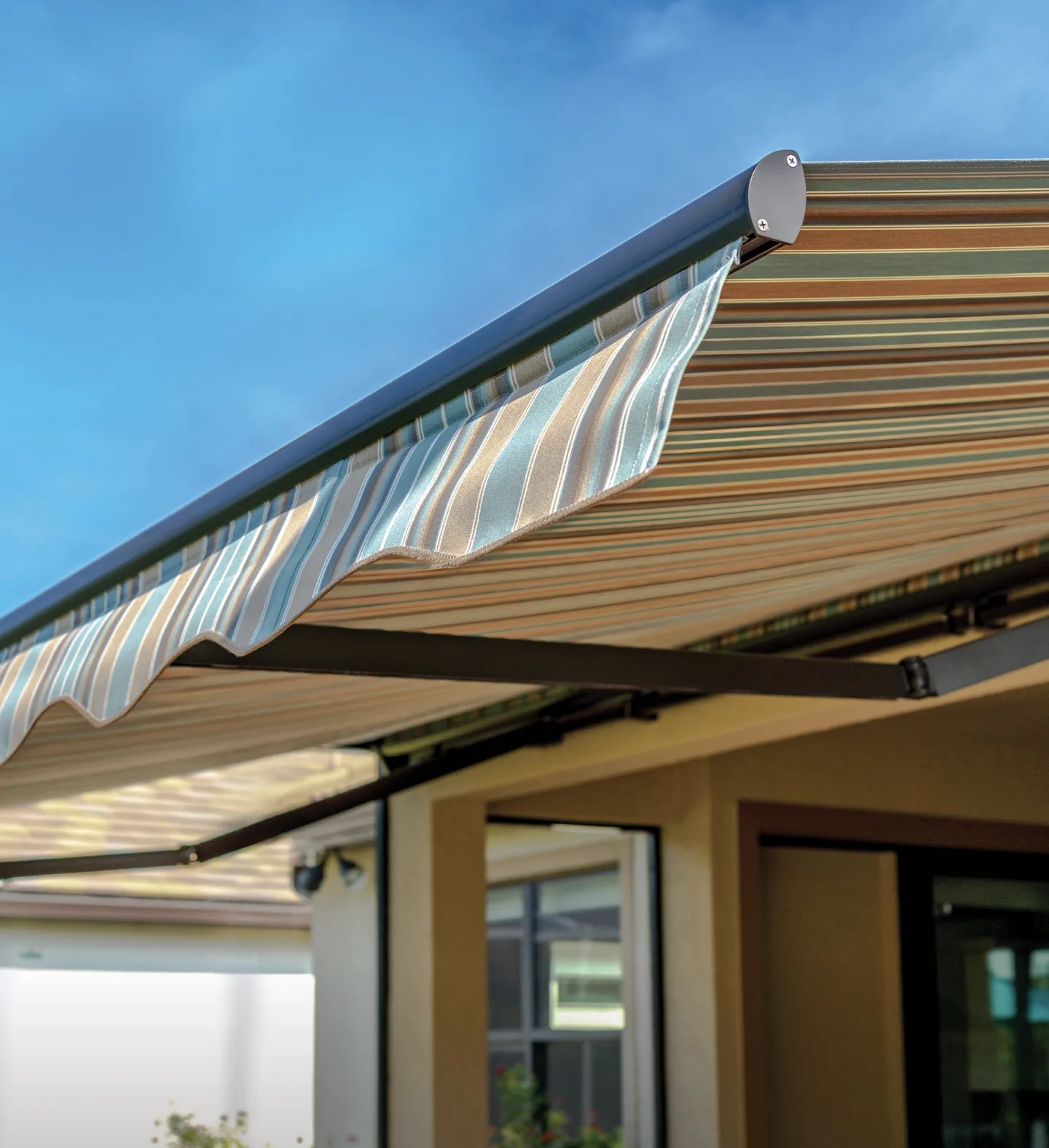
Sunbrella premium awning fabric close-up showing rich color and weave quality
300+ colors

Sunbrella®

+30%

Price Impact (12×10 motorized)

+$1,200–$1,500

Added to installed cost

The Good

  • • Solution-dyed — color goes through every fiber, not just the surface
  • • Holds color for 10+ years even in direct sun
  • • Inherently mold & mildew resistant — no coating needed
  • • 300+ colorways: solids, stripes, jacquard & woven textures
  • • 5–10 year fabric warranty depending on the product line
  • • Industry benchmark — used by most top-tier installers

The Bad

  • • Costs $1,200–$1,500 more upfront
  • • Custom colors may add 2–4 weeks lead time

Warranty

5–10 years non-prorated fabric warranty.

Side-by-Side Comparison

The difference comes down to how the dye is applied — and that single decision affects everything from fade resistance to warranty length.

FeatureStandard AcrylicSunbrella®
Dye methodSurface-dyed (fades from outside in)Solution-dyed (color through every fiber)
Fade resistance3–5 years in direct sun10+ years in direct sun
Mold & mildew resistanceTreated (coating can wear off)Inherent (no coating needed)
Color selection15–30 basic colors300+ colors, patterns & textures
Specialty weaves—Jacquard, herringbone, textured
Fabric warranty2–3 years5–10 years
Price impact (12×10)Included+$1,200–$1,500
Best forShaded or covered patiosDirect sun, all climates

Which Fabric for Your Climate?

UV intensity and rainfall are the two biggest factors in how fast standard fabric fades or mildews.

High UV — Desert & Sun Belt

Phoenix, Las Vegas, Albuquerque, Dallas

→ Sunbrella®

Above 3,500 sunshine hours/year, standard acrylic fades visibly within 2–3 years. Sunbrella® maintains its color for a decade.

Humid & Rainy — South & PNW

Tampa, Miami, Seattle, Portland

→ Sunbrella®

High moisture promotes mildew on surface-treated fabrics. Sunbrella's inherent resistance keeps it looking clean year-round.

Shaded or Covered Patios

Pergolas, covered lanais, under roof overhangs

→ Standard OK

Minimal direct UV exposure means standard acrylic holds up much better. Save the budget for a larger size or motorized upgrade.

Why Solution Dyeing Changes Everything

Most outdoor fabric is woven first and then dipped into dye — a process called piece dyeing or yarn dyeing. This puts the color on the outside of each fiber. Over time, UV radiation and rain strip that surface color away, leaving a faded, washed-out version of the original shade.

Sunbrella® reverses that process. The color pigment is mixed into the liquid acrylic solution before the fiber is extruded — so the color exists throughout the entire cross-section of every thread. There is no surface to fade from. The fiber that's exposed today looks exactly like the fiber underneath it. That's why a 10-year-old Sunbrella® awning can still look close to its original color when a 5-year-old standard acrylic awning looks washed out.

The Real Cost of Replacing Fabric

When standard fabric fades, homeowners face a fabric replacement job that runs $600–$1,200 for a 12-foot awning — labor to remove the old fabric, custom-cut replacement material, and reinstallation. That's often more than the original Sunbrella® upgrade would have cost. And if the awning gets replaced at year 5 because the fabric looks bad, you've also thrown away 5 years of remaining hardware life.

Spread over 10 years, the Sunbrella® upgrade costs roughly $135/year on a 12×10 awning. That's the cost of a streaming service subscription — for fabric that holds its color for a decade.

What "Inherent" Mold Resistance Means

Standard acrylic fabrics are often treated with a mildewcide coating to resist mold growth. That coating degrades over time, especially in humid climates. Once it wears off, mildew can take hold in the weave — and no amount of cleaning brings back a truly mildewed fabric.

Sunbrella® doesn't rely on a coating. The acrylic fiber itself doesn't support mold growth — there's no organic matter to feed on. In high-humidity markets like Tampa, Miami, and Houston, this is the difference between an awning that looks great at year 8 and one that gets replaced.

Get quotes with Sunbrella® fabric included

Our vetted installers carry the full Sunbrella® line. Request quotes and ask to see fabric samples at your in-home consultation.

Find Local Installers You Can Trust

Get exact quotes for your home. We match you with vetted professionals in your area.

Your information is secure.